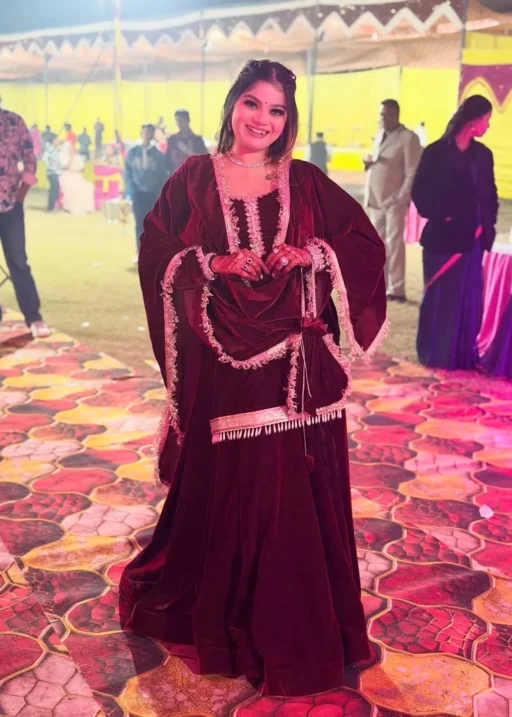
Velvet Suits for Women
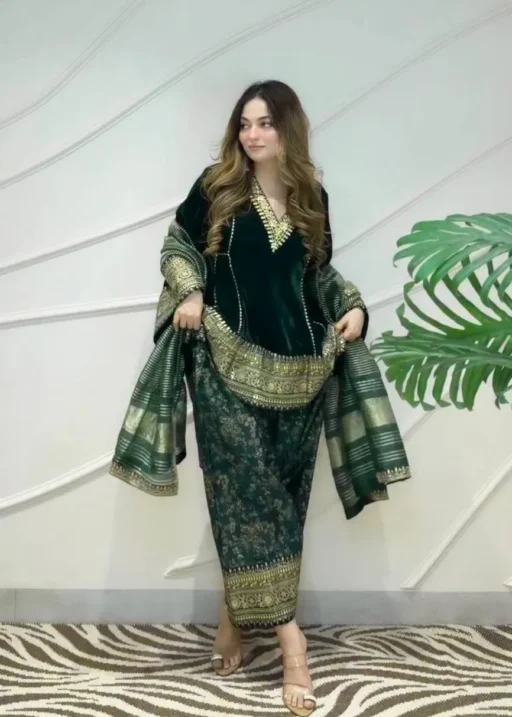
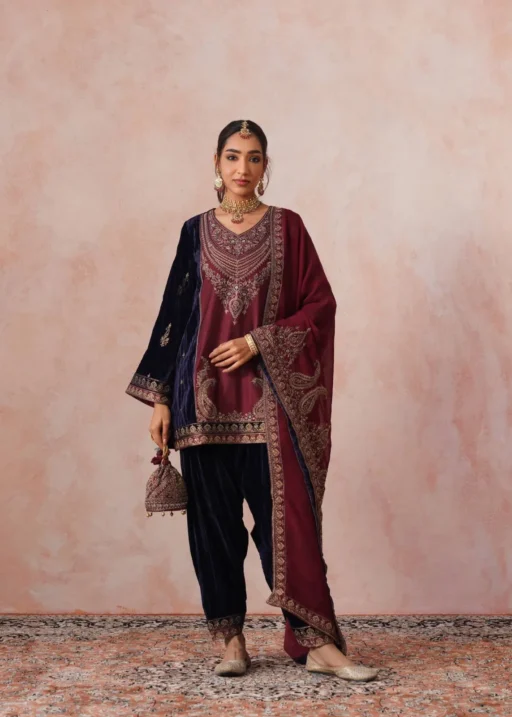
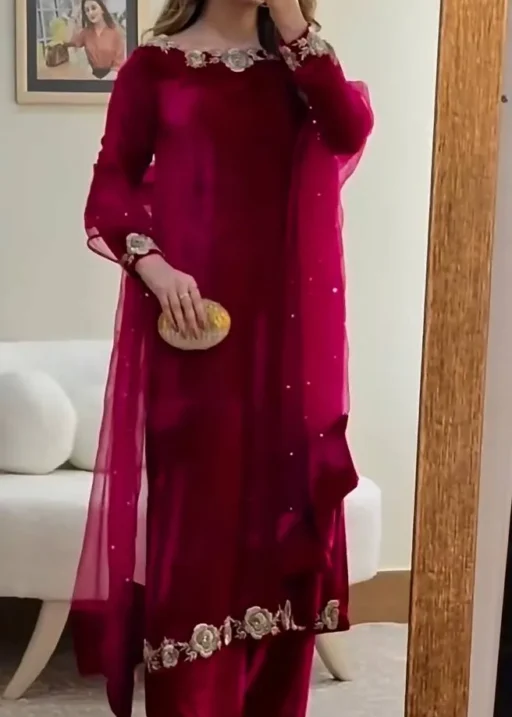
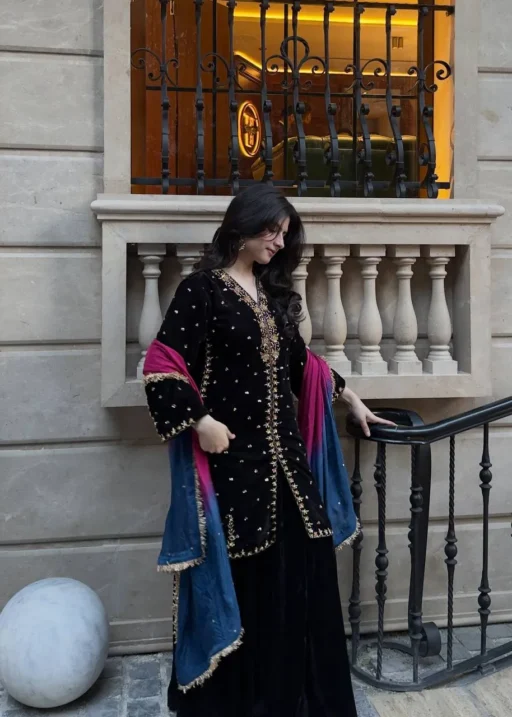
Velvet suits for women are three-piece salwar, Pakistani, slit cut or lehenga-style sets made in dense-pile velvet, worn mostly in India’s winter wedding and festive season. At Ethnic Suits in Surat, our velvet suits for women are cut in heavy viscose velvet with a micro cotton inner and a matching dupatta. They come in sizes M to XXL (3XL in also) and cost ₹1,551 to ₹5,015.
What Is a Velvet Suit?
A velvet suit is a kurta, bottom and dupatta set where the kurta, and often the bottom, is made from velvet, a woven fabric with a short, dense pile that feels soft and catches light. Velvet suits for women are usually dressier than cotton or georgette sets, so they suit weddings, sangeet and reception nights.
Where Did Velvet Come From?
The birthplace of velvet is still debated. Early low-pile silk weaves appear in China from the Warring States to the Han period. A commonly cited account says velvet was introduced in Baghdad around 750 AD. Italian cities such as Lucca, Genoa, Florence and Venice later became leading European velvet centers, with Florence dominant during the Renaissance.
Who Wore Velvet First?
Early velvet was woven from silk and cost a great deal, so it belonged to royalty, nobles and rich merchants. The traveler Ibn Battuta described the ruler of Mali, Suleyman, in a crimson velvet kaftan at Eid. England’s King Richard II asked in his 1399 will to be buried dressed in velvet.
How Did Velvet Reach India?
Nobody knows exactly when velvet weaving began in India. Travelers’ accounts from the 10th to 15th centuries mention eastern and western India as sources of velvet or velvet-like cloth. Under the Mughals, velvet weaving was promoted widely. Lahore, Gujarat and Kashan were main centers for fine voided velvet, and gold-brocaded velvet was called makhmal-i-zarbaft, meaning “cloth of gold”. Mughal royals wore velvet with zardozi embroidery at festivals and weddings. Surat, where we are based, has been known for zardozi since medieval times.
Why Do Indian Women Love Velvet Suits?
- Winter wedding season: Indian weddings cluster roughly between November and February, and velvet is warm without needing a heavy shawl.
- Royal heritage: the fabric still carries its Mughal and court associations, so it reads as rich and formal.
- It pairs with embroidery: sequins, zari, thread work and lace sit beautifully on the pile and look richer in photos.
- Value: silk velvet stays costly, but viscose velvet suits for women give the same rich look at ₹1,551 to ₹5,015.
- Flattering drape: the fabric falls in soft folds, which works for both slim and plus size figures.
How to Choose Your Velvet Suit
Choose a farshi suit for dancing and movement, a Pakistani suit for a long, elegant line, and a lehenga suit for a formal, flared look. If you prefer a lighter feel, pick a set with a net or organza dupatta. Check the size chart, and message us on WhatsApp if you need a custom fit.
How to Care for Velvet
Dry clean velvet suits for women, store them hanging or folded with tissue paper, and keep the embroidery away from rough surfaces. Do not press a hot iron directly on the pile.
FAQs
Are velvet suits only for winter?
Mostly yes. Velvet is warm, so it suits November to February. In warmer cities, an air-conditioned venue or evening event works too.
Is a viscose velvet suit as good as silk velvet?
Viscose velvet looks rich and costs much less. Pure silk velvet is rarer and more expensive, and it needs more careful handling.
Do you ship velvet suits for women worldwide?
Yes. Orders ship free in India within 2 days and are delivered worldwide, typically 4-5 business days after dispatch. Orders are prepaid only.
Browse the velvet suits for women above, and message us on WhatsApp for sizing help.